Curriculum
42 related courses were offered in the 2024–25 academic year.
Policies
CUHK is a publicly-funded higher education institution and recognizes its responsibility to spend its funding wisely. Sustainable procurement is a key practice aimed at reducing the environmental impact of its purchases. The University has established a Sustainable Procurement Policy and Guidelines that promote fair-trade, ethically sourced and vegetarian-friendly products. CUHK is committed to responsible food consumption, and avoids purchasing food items that threaten the livelihood or existence of the species concerned. The university strictly adheres to the three seafood consumption categories recommended by the WWF Seafood Guide, which are designed to lessen the environmental and social impacts of food choices.
Catering committees on campus manage and supervise the various eateries, including canteens, restaurants, fast food outlets, and cafeterias in both the Central Campus and the various Colleges. Their primary focus is to guarantee that students can access a range of nutritious and affordable food options. Potential caterers are subjected to a thorough evaluation and approval process via a stringent catering tendering procedure. CUHK also actively participates in the government’s EatSmart@school Campaign to provide healthy and affordable choices for campus members.
Research
CUHK’s State Key Laboratory of Agrobiotechnology (SKLA) aims to build a World Class International Research Centre in China to conduct basic science research in order to improve China’s agricultural technology, increase agricultural productivity, safeguard national food security and sustainable agriculture, and improve nutrition. By combining the strength of modern biotechnology and the traditional wisdom of breeders and farmers, the laboratory is committed to serving society by generating new knowledge, producing novel technological platforms, products, and training high calibre technologists, thereby boosting technical reserves and agricultural productivity in China and beyond.
SKLA rests on a strong foundation of basic research. Its vision is to address important agricultural questions by conducting applied basic science studies in selected strategic areas. In line with the strategic direction of scientific and technological development set forth in the national 14th Five-Year Plan, SKLA will deepen collaboration between the Mainland and Hong Kong to achieve scientific advancement, in order to deliver new knowledge and innovative products to safeguard global food security and sustainability.
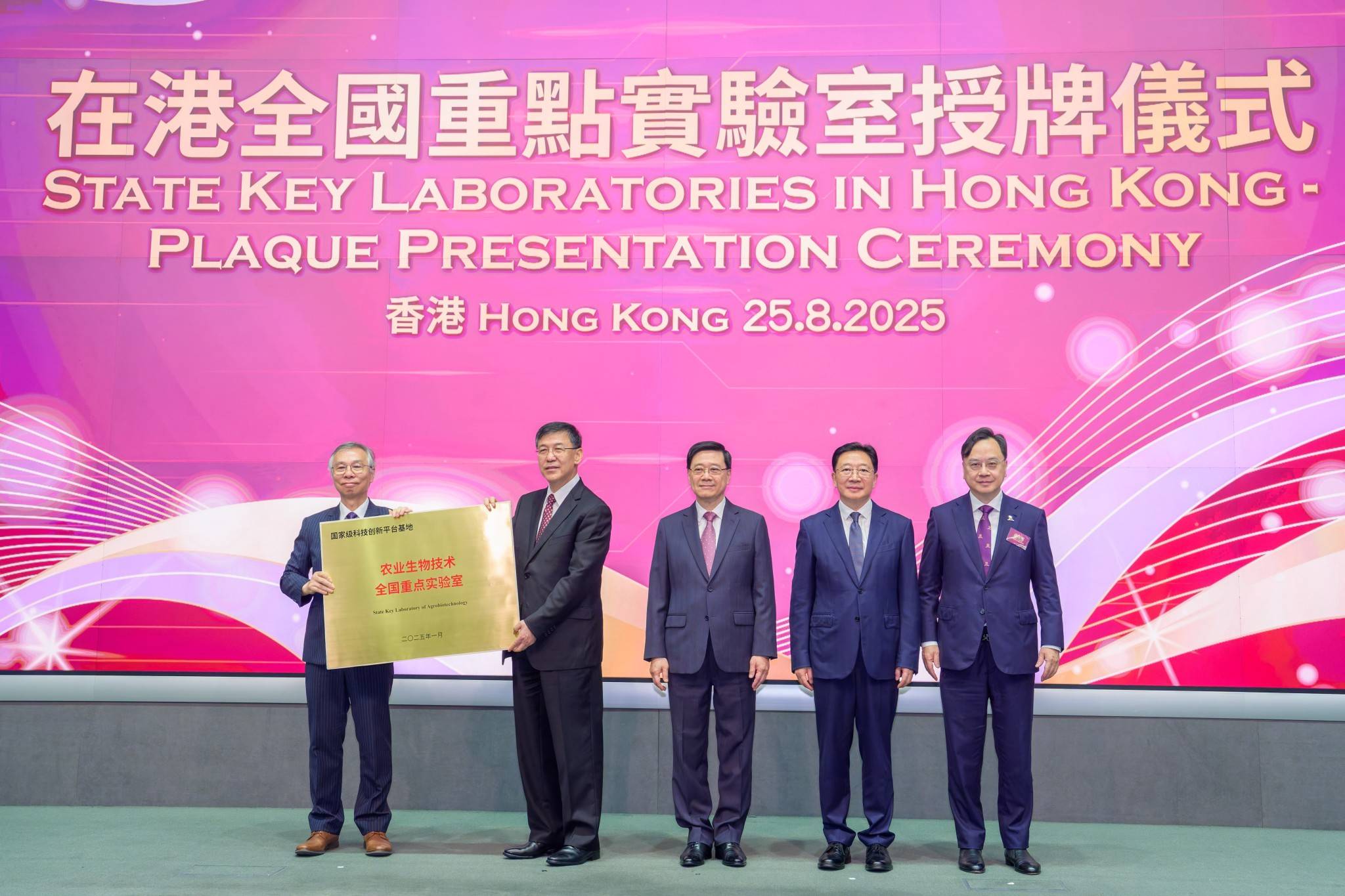
Professor Lam Hon-ming, Choh-Ming Li Professor of Life Sciences and the Director of SKLA, received notable recognition at the 50th International Exhibition of Inventions Geneva, winning a gold medal for his project on ‘Stress Tolerant Soybeans for Climate-Smart Agriculture’, developed with Professor Zhang Guohong. This project addresses agricultural challenges in northwest China and benefits local farmers. Additionally, SKLA received a plaque from the Ministry of Science and Technology of the People’s Republic of China in August 2025, highlighting its significant contributions to national and global technological advancement.
Global efforts to address food security
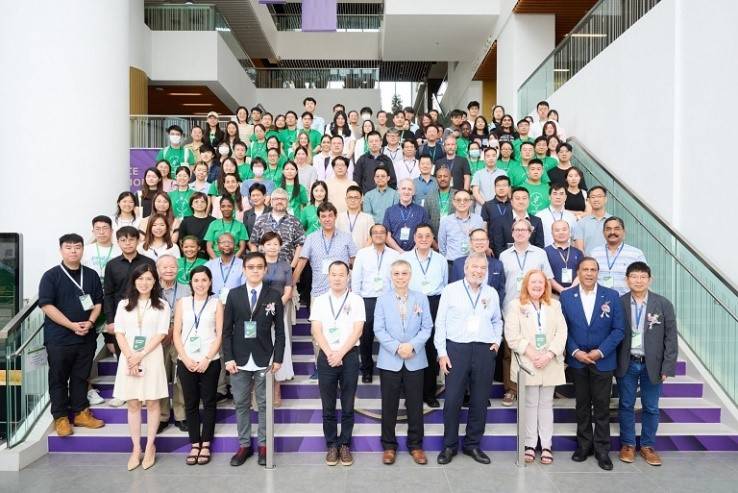
The International Symposium on Agricultural Genomics for Food Security and Plant-Environment Interaction in a Changing Climate was held on 9–11 August 2023. The event brought together over 150 experts and scholars from all over the world. Discussions focused on agricultural genomics, including the potential of underutilized crops and nutritional research to enhance food security. The symposium also set up the International Consortium for Research and Applications of Legumes to drive collaborative research initiatives for environmental sustainability, in line with global efforts to address food security challenges.